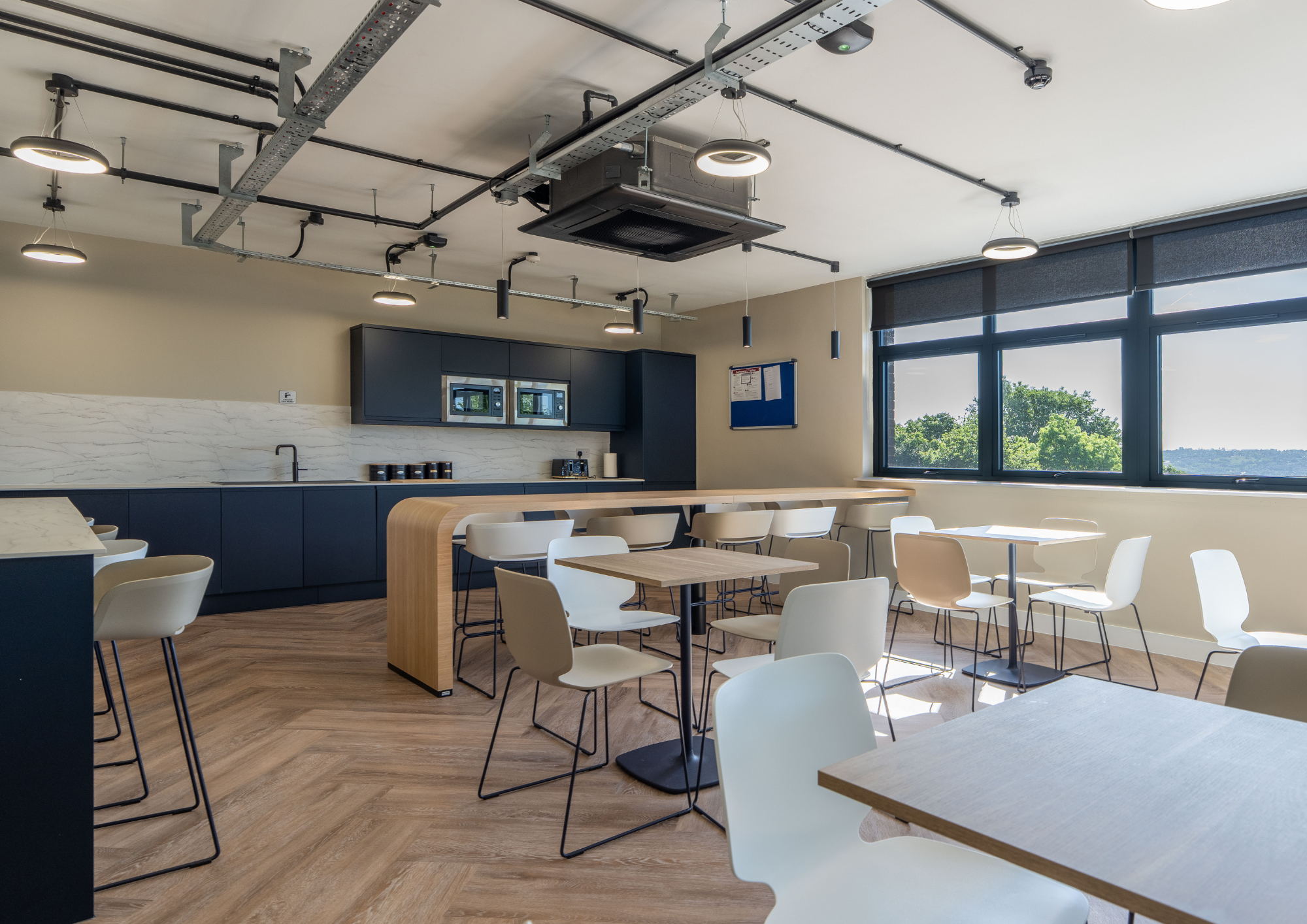
By 2030, the office will no longer be judged by how much it costs, but by how much value it creates.
According to JLL’s Future of Work Survey, 60% of organisations expect to increase their spending on design, fit-out, and refurbishment by 2030. That figure reflects a significant shift in how businesses view the workplace.
Office fit-out is no longer being treated as a property cost alone. Increasingly, it is being recognised as a business investment tied directly to performance, retention, and long-term growth.
What Is Driving the Increase in Workplace Investment?
The relationship between workspace and business performance is now far better understood than it was even a few years ago. Research consistently links workplace quality to employee engagement, retention, collaboration, and productivity.
Businesses that have invested properly in their workspace are already seeing the results. Better attendance, stronger collaboration, and work environments that give employees a genuine reason to come into the office.
At the same time, there is a major commercial driver behind the 2030 investment trend. A substantial proportion of UK office leases signed during the mid-2010s are now approaching expiry.
Many organisations committed to space before hybrid working changed how businesses operate. Those occupiers are now reassessing what they actually need, and what their current workspace may be costing them through poor utilisation, inefficient layouts, reduced productivity, and retention challenges.
For most businesses, the question is no longer whether to invest in the workplace. The question is when to begin, and how to approach the process properly.
The Cost of Leaving the Decision Too Late
The businesses that achieve the weakest return from workplace investment tend to share one common issue. They start the process too late.
An office fit-out or refurbishment cannot simply be compressed into a few months without compromise. Design development takes time. Procurement takes time. Planning properly takes time.
When projects are rushed, costs rise, options narrow, and quality suffers. The finished space often reflects decisions made under pressure rather than the needs of the business itself.
The most valuable period is typically 9 to 12 months before lease expiry.
At that stage, businesses still have time to accurately assess how their current space is performing, decide whether refurbishment or relocation is the right route, plan capital expenditure effectively, and run a procurement process that creates genuine commercial choice.
That window is often where the success of a workplace project is won or lost.
How Formm Approaches Office Fit-Out and Refurbishment
Formm helps businesses make commercially sound decisions about their workspace before the design process begins.
That starts with understanding how the business operates, how the current environment is performing, and what the workspace needs to deliver for the people using it every day.
The result is a workplace that is strategically planned, delivered to the right standard, and built around how the business works, not just how the space looks.
Starting the Conversation
The 60% of organisations planning to increase workplace investment by 2030 will achieve vastly different outcomes depending on when those decisions are made.
Businesses that start early create more flexibility, make better commercial decisions, and deliver workplaces that support long-term performance.
If your lease is approaching within the next 9 to 12 months, now is the time to begin the conversation.
Explore our recent projects or contact Formm to start planning your future workspace.